

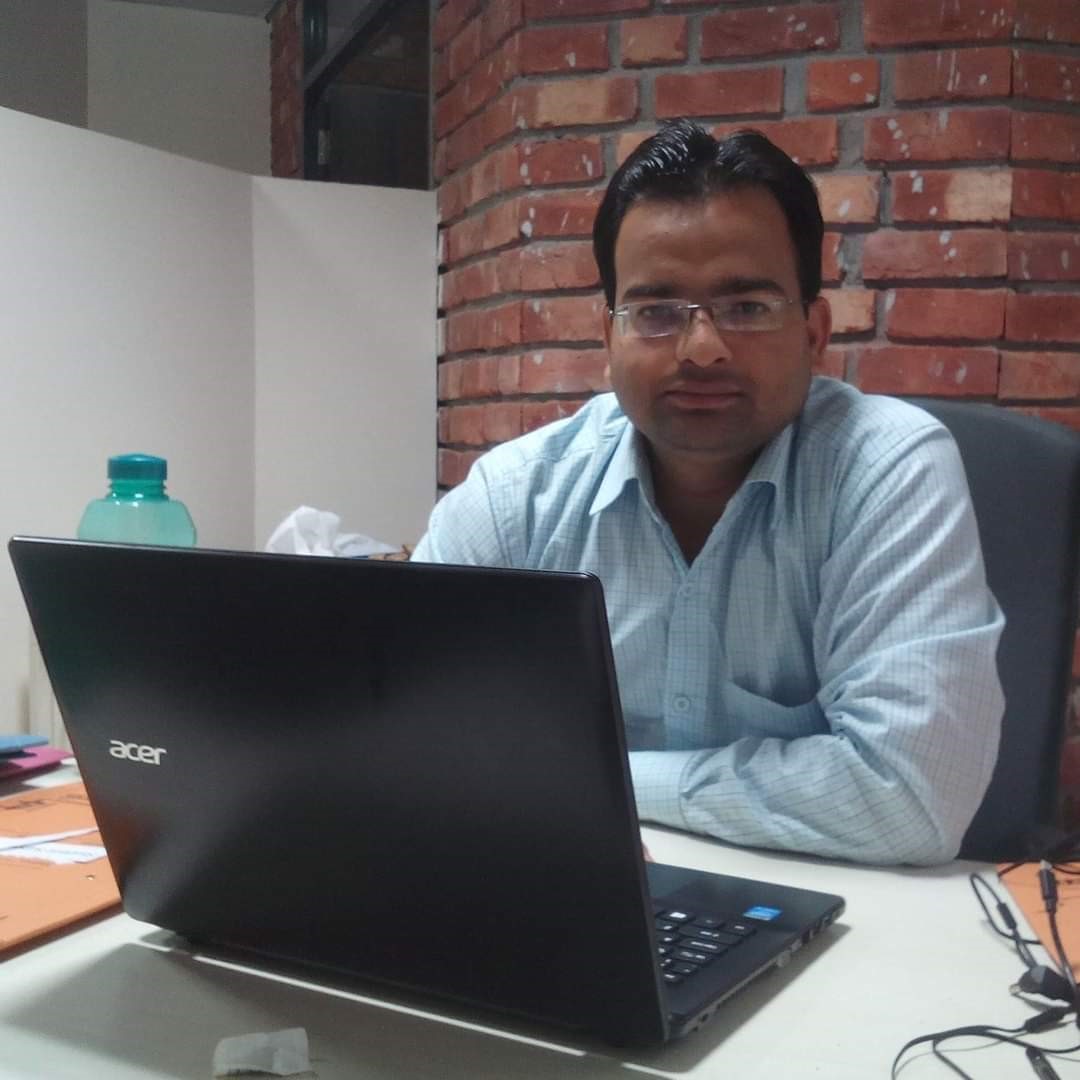
Dr. Anurag Tiwari is a researcher and academic specializing in Computational Neuroscience, Medical Imaging, Deep Learning, and Generative Artificial Intelligence. His research focuses on developing advanced AI frameworks for neural signal decoding, neuroimaging analysis, and intelligent healthcare systems. He works at the intersection of neuroscience and machine learning, leveraging deep neural networks, transformers, self-supervised learning, multimodal learning, and generative models to analyze EEG, iEEG, MRI, and other biomedical data. His research interests include brain-computer interfaces, neural decoding, cognitive state analysis, seizure detection, medical image understanding, and AI-driven clinical decision support. Dr. Tiwari is particularly interested in developing explainable, trustworthy, and biologically inspired AI systems that enhance the understanding of brain function and improve diagnostic accuracy. His long-term goal is to advance Neuro-AI and generative intelligence for next-generation healthcare, neurotechnology, and precision medicine applications.
PHD from Indian Institute of Technology (BHU)- 2022
Computational Neuroscience, Neural Signal Processing, Brain–Computer Interfaces, Neural Decoding, Medical Imaging, Neuroimaging Analytics, Deep Learning, Generative AI, Multimodal Learning
1. Tiwari, A., & Chaturvedi, A. (2022). A hybrid feature selection approach based on information theory and dynamic butterfly optimization algorithm for data classification. Expert Systems with Applications, 196, 116621.
2. Tiwari, A., & Chaturvedi, A. (2021). A novel channel selection method for BCI classification using dynamic channel relevance. IEEE Access, 9, 126698-126716.
3. Tiwari, A. (2023). A logistic binary Jaya optimization-based channel selection scheme for motor-imagery classification in brain-computer interface. Expert Systems with Applications, 223, 119921.
4. Tiwari, A., & Chaturvedi, A. (2023). Automatic EEG channel selection for multiclass brain-computer interface classification using multiobjective improved firefly algorithm. Multimedia Tools and Applications, 82(4), 5405-5433.
5. Tiwari, A., & Chaturvedi, A. (2022). Automatic channel selection using multiobjective X-shaped binary butterfly algorithm for motor imagery classification. Expert Systems with Applications, 206, 117757.
6. Tiwari, A. (2023). A hybrid feature selection method using an improved binary butterfly optimization algorithm and adaptive β–hill climbing. IEEE Access, 11, 93511-93537.
7. Saba, L., Tiwari, A., Biswas, M., Gupta, S. K., Godia-Cuadrado, E., Chaturvedi, A., ... & Suri, J. S. (2019). Wilson’s disease: A new perspective review on its genetics, diagnosis and treatment. Frontiers in Bioscience-Elite, 11(1), 166-185.
8. Tiwari, A. (2023). Wilson’s disease classification using higher-order Gabor tensors and various classifiers on a small and imbalanced brain MRI dataset. Multimedia Tools and Applications, 82(23), 35121-35147.
9. Hamdan, I. K., Aziguli, W., Zhang, D., & Tiwari, A. (2026). Deep learning-based blockchain framework for fraud detection using multilevel supervision in hierarchical generative hashing. International Journal of Machine Learning and Cybernetics, 17(1), 15.
10. Tiwari, A., & Tiwari, S. (2026). A spatiotemporal learning framework with causality-aware feature modulation and stacked Riemannian auto encoder for multiclass motor imagery classification. Biomedical Signal Processing and Control, 125, 110715.
11. Tiwari, A., Raj, R., & Khurana, M. (2026). DeepStruct: Multi-modal deep learning integrating omics and energy scoring for protein structure prediction in plants. Computational Biology and Chemistry, 109076.